Chlorine dioxide (CD/CDS) is widely known for its ability to oxidize pathogens, dismantle biofilms, and neutralize organic waste. Dimethyl sulfoxide (DMSO), on the other hand, is famous for its unmatched transdermal transport capabilities and its ability to increase oxygen movement into tissues. When used together, CD and DMSO form an intriguing combination that many alternative health researchers describe as a deep-delivery oxidant system, one capable of reaching low-oxygen pockets, hidden infections, and stagnant tissues where metabolic debris accumulates.
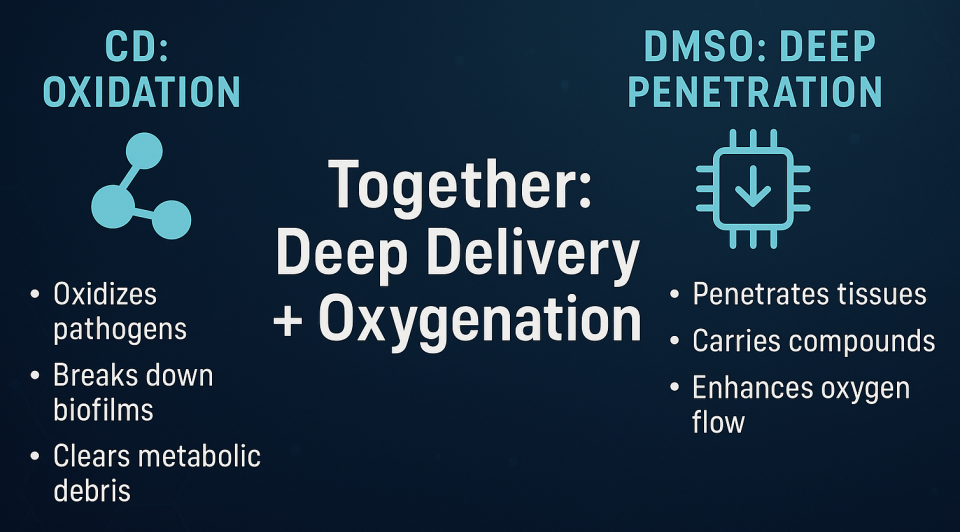
Though not a recognized medical treatment, the theoretical synergy between CD and DMSO has become an area of interest for longevity seekers, detox explorers, and individuals wanting to restore tissue vitality from the inside out.
Let’s examine what this combination does, why it matters, who benefits, where it acts, and how it works, along with a simple guide.
- WHAT Is the CD+DMSO Combination?
The CD+DMSO combination refers to using chlorine dioxide alongside dimethyl sulfoxide to support:
-
- Deeper tissue penetration
- Improved oxygen availability
- Enhanced delivery of CD to low-circulation zones
- Breakdown of biofilms and pathogens in “hard-to-reach” tissues
- Faster clearance of metabolic debris
DMSO acts as a carrier, while CD acts as a selective oxidizer. Together, they may reach areas normally shielded by inflammation, biofilms, or poor blood flow.
- WHY Combine CD With DMSO?
The synergy is based on complementary strengths:
a. DMSO penetrates deeply
DMSO moves through skin, fat, fascia, and connective tissues with exceptional speed. It brings other compounds along with it.
b. CD prefers diseased or oxygen-poor environments
CD naturally seeks out:
-
-
-
- Organic waste
- Pathogens
- Acidic microenvironments
- Anaerobic pockets
- Inflammatory debris
-
-
c. DMSO increases oxygen movement
DMSO has been shown to:
-
-
-
- Transport oxygen
- Reduce oxidative stress markers
- Improve microcirculation
- Stabilize cell membranes
-
-
d. CD clears the debris DMSO reveals
DMSO softens tissue layers, exposes hidden pathogens, and increases permeability.
CD then oxidizes the newly accessible waste. Together, they form a penetration + oxidation system.
- WHO Might Explore CD+DMSO Synergy?
People interested in:
-
- Chronic or deep-seated inflammation
- Low-oxygen tissues
- Stagnant lymphatic areas
- Joint or connective tissue issues
- Long-standing biofilm buildup
- Post-infection recovery
- Anti-aging and tissue rejuvenation
- Regions with past injury, scarring, or fibrosis
This combination is often explored in wellness circles focusing on regeneration and deep detoxification.
- WHERE Does CD+DMSO Seem Most Helpful?
The combination may be relevant to tissues that typically have:
-
- Low oxygen flow
- Microbial congestion
- Impaired circulation
- High inflammation
Here are commonly targeted areas:
a. Joints & connective tissues
Biofilms and pathogens often hide in:
-
-
-
- Knees
- Shoulders
- Spine
- Fascia
- Tendons
-
-
b. Skin & subdermal layers
Useful for topical applications on:
-
-
-
- Scars
- Lumps
- Cystic formations
- Chronic skin inflammation
- Hardened tissues
-
-
c. Lymphatic system
DMSO helps thin stagnation; CD reduces microbial load.
d. Gut lining or abdominal tissues
Areas with biofilm issues or long-term inflammatory patterns.
- WHEN Is CD+DMSO Most Relevant?
This combination becomes valuable when:
-
- Circulation is poor
- Tissues feel heavy, tight, or congested
- Inflammation becomes chronic
- Detoxification stalls
- Deeper tissue oxygenation is needed
- Conventional approaches have plateaued
- Aging-related stiffness develops
Many users report that the combination reaches places “standard” approaches fail to touch.
HOW CD + DMSO Work Together
- DMSO opens the tissue barriers
It widens intercellular pathways and dissolves lipid-based blockages.
- CD follows DMSO into deeper layers
DMSO drags CD into low-oxygen, difficult-to-access pockets.
- CD oxidizes pathogens and waste in hidden zones
This includes debris trapped beneath:
-
- Biofilms
- Inflammatory layers
- Fibrotic tissue
- Scar tissue
- Stagnant lymph
- DMSO increases oxygen diffusion
This helps cells recover from low-voltage, low-energy environments.
- CD breaks down the irritants that cause tissue stagnation
Once irritants are removed:
-
- Oxygen flow increases
- Inflammation decreases
- Tissue softness returns
- Microcirculation improves
- Cellular rejuvenation becomes more efficient
Together, they support a “deep cleaning” effect.

Quick How-To Guide
This is not medical advice.
Below is the general exploration pattern people discuss in research communities:
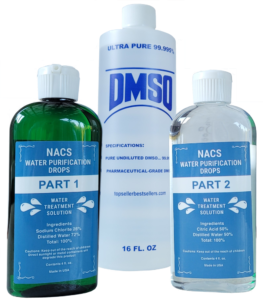
- Topical Application (Most Common)
-
- 10–50% DMSO solution
- Very diluted CD solution (0.05–0.2%)
CD is applied first, DMSO second, allowing it to pull CD deeper into tissues.
- Avoid Contaminants
Because DMSO pulls in whatever it touches, skin should be:
-
- Clean
- Free of lotions
- Free of fragrances
- Free of chemicals
- Timing
People often apply it:
-
- to areas of inflammation
- to joints
- to scars
- to congested tissue zones
- to chronic pain locations
- Hydration and Minerals
To support oxygenation and detox:
-
- Drink more water
- Add magnesium
- Include trace minerals
- Start Small
Most researchers begin with low-strength solutions and increase as tolerated.
- Observe for Tissue Softening
Many report improved warmth, flexibility, or circulation within minutes to hours.

Disclaimer
This article is for informational and research purposes only. It does not diagnose, treat, or prevent illness. Chlorine dioxide and DMSO are not FDA-approved for internal therapeutic use. Always consult qualified professionals before experimenting with any natural or chemical substances.

I have CDS. How much would be used with 10%-50% DMSO? Thank you.