Posttraumatic stress disorder is one of the hardest human struggles to explain to someone who has never lived through it. The danger may be over, yet the body can still behave as if it is happening right now. A sound becomes a warning. A crowded room feels unsafe. Sleep becomes difficult. The muscles stay tight. The mind keeps scanning the horizon, looking for something that may never come.
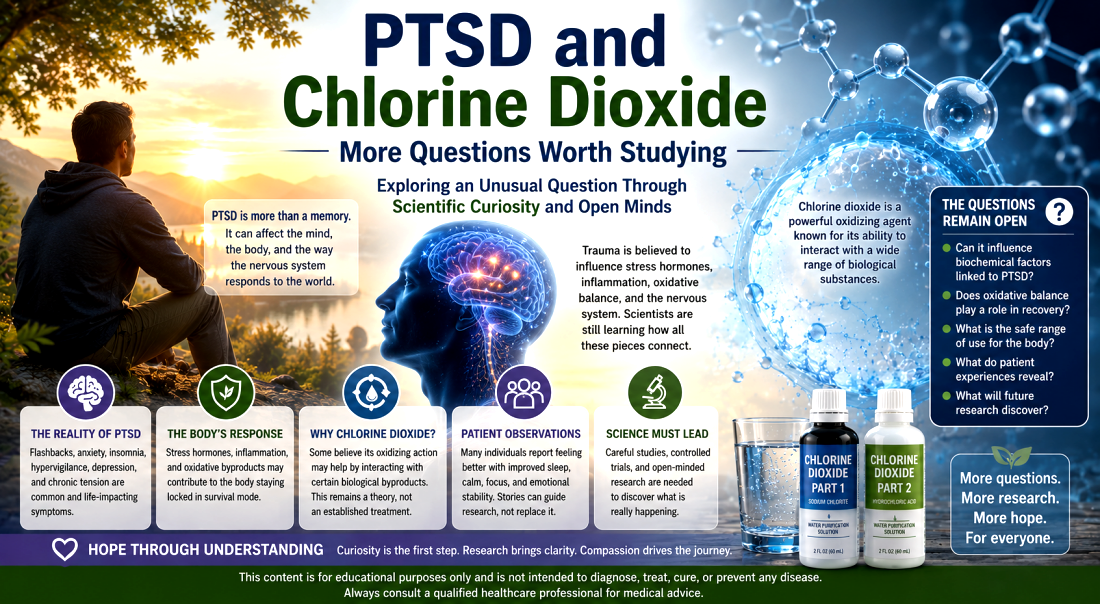
PTSD is not weakness, and it is not simply a bad memory. It is a real condition that can affect thoughts, emotions, sleep, relationships, and the body’s stress response. The National Center for PTSD says effective treatments are available, with trauma-focused therapies such as prolonged exposure, cognitive processing therapy, and EMDR receiving the strongest recommendations. Certain medications can also help some people.
Even so, not everyone finds complete relief. That is where people begin asking new questions.
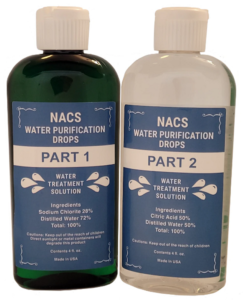
Why Chlorine Dioxide Enters the Conversation
Over the years, I have heard personal reports from people who believe their PTSD symptoms became easier after using chlorine dioxide.
Some describe sleeping better. Some say they feel less tense or less emotionally trapped. Others report greater calm or clearer thinking.
Those accounts may be sincere and meaningful to the people sharing them. But they are still personal reports. They do not prove that chlorine dioxide caused the improvement, and they cannot establish that it is safe or effective for PTSD.
Health can change for many reasons. Counseling, medication, sleep, nutrition, exercise, relationships, time, expectation, spiritual practice, and natural changes in symptoms may all play a role.
Still, when similar stories continue to appear, I believe they can justify a question:
Is there something here that deserves proper research?
PTSD Is More Than a Memory
Modern research shows that PTSD can involve changes in the nervous system, stress hormones, inflammation, and oxidative balance.
That does not mean PTSD is caused by “toxins” that can simply be washed away. Nor does it prove that an oxidizer can correct the condition. It does mean the old idea that PTSD exists only in the imagination is wrong.
Trauma can leave measurable effects throughout the body. Researchers are continuing to study how these systems interact and why some people remain stuck in a survival response long after the original danger has passed.
The Oxidation Question
Chlorine dioxide is an oxidizing agent best known for controlled uses in water treatment and disinfection.
Supporters believe that its oxidative action may influence biological conditions linked with chronic stress. That remains a theory, not an established treatment mechanism.
There is an important reason to be cautious here.
Oxidation is not automatically healing. The body uses oxidation in normal biological processes, but too much oxidative activity can damage cells. Research connecting PTSD with oxidative stress does not show that people with PTSD need an additional oxidizer.
That question would require laboratory work, careful dose studies, safety monitoring, and controlled human trials.
What About DMSO?
There are many discussions that combine chlorine dioxide with DMSO because DMSO can carry substances through biological tissues.
There is no established clinical protocol showing that chlorine dioxide combined with DMSO safely or effectively treats PTSD.
Stories Can Begin Research, but They Cannot Finish It
Patient observations have sometimes helped scientists notice unexpected possibilities. But a story is the beginning of a question, not the final answer.
A useful study would need to ask:
- Did PTSD symptoms improve more than they did with a placebo?
- How was the chlorine dioxide prepared and measured?
- What other treatments were participants receiving?
- Were there changes in sleep, anxiety, flashbacks, or daily function?
- Were there effects on the blood, kidneys, digestive system, lungs, or nervous system?
- Did any improvement continue after use stopped?
Until those questions are answered, confidence should not outrun evidence.
Hope Without Abandoning What Works
No one living with PTSD should be made to feel that the condition is hopeless.
Effective therapies do exist, and recovery can happen even after symptoms have lasted for years. Trauma-focused psychotherapy is currently recommended ahead of medication in major PTSD guidance, although medications and supportive care remain valuable for many people.
People may also find support through grounding exercises, massage, acupuncture, gentle movement, time outdoors, safe relationships, spiritual practices, Reiki, sleep care, and other calming routines. These can complement professional treatment without pretending to replace it.
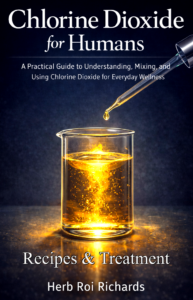
In Herb Roi Richards’ book, Chlorine Dioxide for Humans: Recipes & Treatment, it is reported that many have achieved effective results by using chlorine dioxide with complementary products, such as Oceanic Magnesium, apple cider vinegar, aloe vera, flaxseed oil, Lugol’s iodine, Epsom salt bath, and grounding activities like mild rebounding, slow walking, or sunlight exposure.
Unusual observations should not be mocked merely because they challenge accepted ideas. Hope should not be built on certainty that the evidence has not earned. People who report relief deserve to be heard. People considering an unproven approach deserve accurate safety information.
Researchers deserve the freedom to examine controversial questions. And people with PTSD deserve more than arguments. They deserve answers.
Maybe future research will show that chlorine dioxide has useful role in PTSD or not. Perhaps it will reveal an unexpected biological effect. At present, we do not know. That uncertainty is not a reason to make promises. It is a reason to investigate carefully.
Informational Notice
This article is for educational and informational purposes only. It is not medical advice and does not recommend chlorine dioxide or DMSO for PTSD or any other health condition. Chlorine dioxide can irritate the eyes and respiratory system, and products sold as MMS or similar preparations have been associated with serious adverse effects when consumed. Anyone experiencing PTSD symptoms should seek support from a qualified mental-health professional and should not stop prescribed medication or therapy without medical guidance.